Workforce Insights: March 2026

Advocating for South Australian physicians ahead of the state election: what we delivered
A united front with medical colleges, amplified in the media
In the lead-up to the South Australian election, we brought national attention to the pressures you’re facing – workforce shortages, rising demand, and the growing risk of burnout.
Our Election Statement (PDF) called for urgent action to build a sustainable physician workforce, so you can continue delivering high-quality care without unsustainable system strain.
In a joint statement (PDF) with nine other Colleges, doctors in South Australia called on all parties to commit to three clear priorities ahead of the March election: map the state's healthcare gaps, plan the medical workforce properly, and cut red tape that stops doctors working where they're needed.
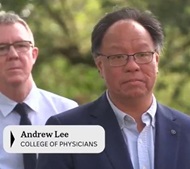
The message was amplified at a media conference, held outside the Women’s and Children’s Hospital in Adelaide. We collectively called on all parties to commit to three clear priorities: mapping the state's healthcare gaps, planning the medical workforce more effectively, and reducing regulatory barriers that prevent doctors from working where they are most needed. Our advocacy was successful, being broadcast on ABC Television, 10 News, 7NEWS Australia, Nine News and ABC Radio.
"The government in office after the election must act to meet patient need, improving physician access, remove barriers to hospital discharge, and focus on preventive health. These are critical steps to boost patient care and preserve SA’s reputation for world-class healthcare” said RACP South Australian Chair, Associate Professor Andrew Lee.
Associate Professor Lee also met with Shadow Health Minister the Hon. Heidi Girolamo to discuss better collaboration, so together, we can support physicians across the state, especially on workforce planning. We will continue these discussions with Health Minister the Hon. Chris Picton to ensure your voice is heard.
 When the Aotearoa New Zealand Government moved to regulate physician associates last year, we acted quickly. Our message was clear, introducing a new, unproven role is not the solution to a healthcare system that's already under pressure. Instead, the priority should be investing in and growing the existing, highly-trained workforce you’re part of.
In
our submission (PDF) to the Medical Council of New Zealand's consultation, we reinforced a clear position – there is no demonstrated need for physician associates, particularly when there is no local training pathway and significant workforce gaps remain among regulated health professionals. The focus needs to be on growing the existing Aotearoa New Zealand regulated healthcare workforce.
We also raised key concerns on your behalf. Physician associates must not replace physicians or trainees, reduce training opportunities, or add to supervision burdens. They cannot safely manage undifferentiated patients independently, and any role must be tightly regulated.
Importantly, we emphasised that cultural safety, cultural competence and Hauora Māori must be central to any regulatory approach. We also recommended changing the title 'physician associate' to a term such as ‘clinical assistant’.
This work builds on our ongoing advocacy and the work of our Binational Physician Assistant/Associate Working Group. A draft RACP position statement will be released for member consultation soon, giving you the opportunity to have your say.
Ahead of the 2026-27 Federal Budget (which is expected to be delivered in May 2026), we’ve lodged our pre-budget submission (PDF) to the Australian Federal Treasury. It outlines practical solutions to strengthen Australia’s healthcare system. Titled the physicians’ prescription for Australia’s healthcare (PDF), our submission outlines practical solutions to strengthen Australia’s healthcare system.
Our key priorities include:
- Getting physicians where they're needed most – addressing workforce gaps, including in Indigenous communities, and strengthening training pathways and improving supports for overseas trained physicians.
- Supporting and growing rural physician care – better relocation support, Medicare rural loadings, reformed remote area tax concessions and enhanced opportunities for continuing education.
- Protecting physician wellbeing – building a better picture of wellbeing across the profession to support sustainable practice.
- Enhancing medicine shortage responses – continuing our close collaboration with the TGA to better predict and respond to potential medicines access issues.
- Modernising Medicare to a fit-for-purpose system – Medicare must reflect the increasingly complex care and and team-based models. It must support physicians working with GPs, allied health and other professionals.
- Investing in preventive healthcare – this is a critical way to reduce challenges in accessing healthcare where preventive healthcare reduces disease.
This submission is just part of our broader advocacy efforts, supported by members and our Policy and Advocacy team. We thank all who have contributed.
 The NSW Government’s response (PDF) to the Special Commission of Inquiry into Healthcare Funding signals progress on key priorities for physicians – stronger workforce planning, a focus on wellbeing, and greater investment in preventive care.
Encouraging steps include improving workforce wellbeing data and acknowledging the need for leadership roles, such as the appointment a Chief Wellbeing Officer for workforce. However, real impact will depend on delivery. Better collaboration is needed between the NSW Government and colleges on growing specialty training networks. We are seeing positive signs, particularly in regional, rural and remote areas.
We’ve also engaged with Dr Joe McGirr MP on
rural health reform and our
strategy, reinforcing the vital role of physicians in regional care. We look forward to these ongoing discussions with Dr McGirr, to help ensure the physician voice is a key part of broad rural healthcare advocacy.
We’re concerned it may take too long for physicians outside hospitals to access the new Single Digital Patient Record, which is scheduled to roll out next year. Better sharing of clinical information across healthcare settings is critical for reducing workloads and inefficiencies.
 A new national framework (PDF) on ethical billing and fee transparency has been released, which supports you with navigating one of the more scrutinised parts of practice. Developed by the Council of Presidents of Medical Colleges (CPMC), the framework reinforces what most physicians already do: set fees responsibly, communicate clearly, and ensure patients understand costs before care begins. We worked closely with CPMC alongside other medical colleges to ensure your voice was heard.
We know billing isn’t straightforward. Fees are only one part of a much bigger challenge, shaped by workforce shortages, limited public clinic access, and a Medicare system that often doesn’t reflect the true cost of care. These are the issues we continue advocating on your behalf.
While the RACP does not set or recommend fees, we support your ability to practise ethically and transparently, based on professional standards and informed financial consent. We’ll keep working with government and medical colleges to improve access to specialist care, to help build a better system that better supports you.
Read Framework (PDF)
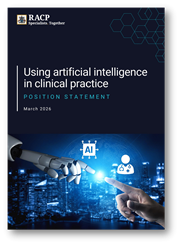
Artificial intelligence is rapidly changing healthcare – and our position is clear, it needs to work for you, not instead of you.
To support Fellows and trainees navigate this shift, we’ve released Using Artificial Intelligence in Clinical Practice (PDF), a practical guide covering how to implement, interact with and monitor AI systems responsibly.
From addressing common barriers to offering practical solutions, the guide focuses on what matters most – better patient experience, population health, cost efficiency, clinician wellbeing and health equity.
This work reflects your input. Thank you to all members who shared feedback, and the Digital Health Advisory Group for leading its development.
Read now (PDF)
Expanding specialist training
Six new funded training posts have been secured across New South Wales and Victoria. Consistent with our ongoing commitment to rural, regional and remote health equity, these training posts support growth in general medicine, public health, paediatrics and child health medicine and nephrology, which strengthens the future workforce.
Regional, rural and remote specialist workforce
We joined national leaders and colleges to rethink how specialist training better supports rural practice. Focusing on what it takes to attract and retain physicians in regional and remote communities, we had these important conversations with National Rural Health Commissioner, Professor Jenny May AM, and the Federal Assistant Minister for Rural and Regional Health, the Hon. Emma McBride at a CPMC workshop. The Productivity Commission’s final report into delivering quality care more efficiently shared our focus on developing collaborative care models and investing in preventive care
Shaping the future of digital health: policy priorities for parliament
Alongside the Australasian Institute of Digital Health, we recently met with the Assistant Minister for Health and Aged Care, the Hon. Rebecca White MP, to discuss our joint policy priorities for digital health (PDF). The meeting discussed the need for continued investment in the National Digital Health Capability Action Plan to build and maintain digital health skills across the healthcare workforce.
RACP feedback to doctors’ health and wellbeing curriculum
We recently provided feedback to the Australian Doctors’ Health Alliance national doctors' health and wellbeing curriculum. We identified its alignment with our work in training and wellbeing and advocated for stronger support for overseas trained physicians, supervisors, Aboriginal and Torres Strait Islander physicians, as well as physicians working in regional, rural and remote areas. Ethical issues around moral distress and workplace culture were also raised.
Improving ADHD care
We’re promoting our new national model for ADHD care (PDF) to Australian governments. Aimed at improving access, consistency and patient outcomes, the staged, tiered model recognises the complexity of ADHD, particularly paediatric and adolescent ADHD, and maintains the safety and quality of ADHD care in Australia.
Support for new Medicare paediatric care items
A parliamentary inquiry into the Thriving Kids initiative joined our call for new Medicare items that better reflect modern paediatric care. Read more
Disciplinary matters around sexual misconduct
Ahpra’s guidance on handling professional disciplinary matters around sexual misconduct reflects our advocacy for clear definitions, proportionality and safeguards to ensure fair and transparent regulation.
Our contribution (PDF) to the Medical Board of Australia's work on recency of practice includes the need for clear guidance and recognition of the broad range of ways in which physicians practise. It also calls for appropriate support for return to practise following extended leave and career changes.
Shaping Western Australia's future workforce
We’re working closely with the Western Australian Government to strengthen physician workforce planning, especially in regional, rural and remote areas. This includes advocating for sustainable training models, supporting high-demand specialties like paediatrics and child health medicine, cardiology, nephrology, and growing the Aboriginal and Torres Strait Islander physician workforce.
Influencing Tasmania's preventive health strategy
Our engagement with the Tasmanian Government is making an impact, with many of our recommendations reflected in its latest preventive health strategy. We continue our work calling on better planning to meet future demand across key areas that are critical to managing long-term conditions, and addressing regional, rural and remote workforce challenges. This includes geriatrics, cardiology, respiratory medicine, endocrinology, paediatrics and child health medicine and rehabilitation medicine.
Getting to sustainable practice in Aotearoa New Zealand
We recently met Te Whatu Ora – Health New Zealand senior leadership on important issues for our physicians. We discussed how we can work together to help grow and support the physician workforce, while prioritising sustainable workloads and rural healthcare. Discussions covered a range of issues such as supervisor workloads, protected training time, importance of generalist physicians and optimising models of care across different hospitals. We are looking forward to further work with Te Whatu Ora, particularly around supporting trainees, supervisors and growing the Māori workforce.

Fossil fuels harm health, drive climate change, worsen inequities, and impact Indigenous lands and wellbeing.
Join us for the launch of our new position statement on health and fossil fuels at our webinar held on Tuesday, 21 April from 5.30pm to 7.30pm AEST. Hear from experts as they discuss the health impacts of fossil fuels and how we can transition beyond them in ways that prioritise health equity, Indigenous justice and planetary health.
Register now
Education Development Grants provide support to Fellows and trainees to undertake further educational training or to develop educational initiatives in the year of the award. Applications for 2026 funding open from Tuesday, 3 March to Tuesday, 7 April 2026. The following grants are available for funding in 2026.
You can access application dates for all Research Awards and Career Grants for 2027 funding on the Foundation webpage.

Our new tailored event series, RACP LIFT 2026 is a blend of clinical insights, topical discussions and short form, highly-digestible sessions that fit seamlessly into your busy schedule.
This year-long program has three distinct event formats; Rapid-fire Clinical Updates, In Conversation interviews and a two-day conference tailored to trainees and early career Fellows.
Running from March to November across Australia and Aotearoa New Zealand, the program will feature industry leaders, influential voices and thought leaders – spotlighting the strength and diversity of our multidisciplinary community.
Explore now

Tuesday, 31 March l RACP Sydney Office l 5pm-9.30pm
Join leading experts across cardiology, hepatology, nephrology, clinical pharmacology and endocrinology for a fast-paced series of clinical updates designed to inform real-world patient care. Hear the latest on emerging treatments, guideline changes and key developments followed by a panel discussion, case study and networking time over refreshments.
Topics include: adipose tissue, subclinical coronary artery disease, renal and hepatic metabolism, and novel treatment strategies.
Hurry, registrations close Monday, 30 March 2026. Secure your spot now.
Find out more

You're invited to the first webinar in our 2026 Wellbeing Advocates series, Thriving in Medicine: Practical wellbeing strategies, self-determination and sustainable performance.
Held on Thursday, 9 April from 4pm to 5pm AEST, this online session will explore practical strategies to strengthen resilience, support wellbeing, and build sustainable habits for long-term personal and professional growth.
Hear from expert speakers with lived experience as they share their insights on navigating challenges and sustaining a thriving career.
Register now
Health provider compliance priorities
 The Department of Health, Disability and Ageing is responsible for ensuring compliant health provider claiming for Australian Government health program payments.
It has released its compliance priorities (PDF), which reflect its commitment to act to protect Medicare integrity. The document also entails its enduring priorities, which present a persistent risk to the integrity and sustainability of Australian Government health programs.
The Department is committing ongoing, dedicated resources to prevent and address these issues.
Find out more about the 2026 focus areas, which are:
- telehealth
- care and management plans
- claiming MBS services while overseas
- open and uncertified PBS claims
- inappropriate claiming of PBS medicines.
Read now (PDF)
 As healthcare workers who dedicate our lives to helping others, it’s important to take the time to care for ourselves. We would like to remind everyone that it's okay to not be okay. If you need someone to talk to, you can reach out to the RACP Support Program. It's a free, 24/7 and completely confidential support service that is delivered externally through Converge International.
Whether you have something worrying on your mind, are finding getting out of bed to be a struggle, or just feel like talking to someone for helpful, judgement-free advice, this free support service may be just what you need.
Find out more