Your College Update – 15 July 2026
.png?sfvrsn=616b71a_0 "College update banner - new (1)")
Building a better member experience with TRELLiS
Dear members,
This is the first in a series of monthly messages updating you on one of the member focused initiatives underway at the RACP which will directly benefit you.
One of the most important initiatives is TRELLiS, which is short for Together, we Re-imagine, Empower, Listen, Learn and gain insightS. TRELLiS will significantly improve how trainees and Fellows interact with The RACP, making it easier and faster to access College services.
Our member experience transformation program is the largest program in the College's history, replacing 19 outdated systems with a modern, integrated platform and processes to better support training, education and member services.
The program is being carefully managed, with rigorous oversight from the Board, an independent technology committee, and the Senior Leadership Team.
TRELLiS is progressing well, tracking on time and to budget. We’re currently in the design and build phase, with systems being developed, tested and refined. Focus groups of trainees and Fellows have been involved all the way through this process to ensure we meet your expectations and requirements as busy working physicians.
From early 2027, members will start seeing changes in their online experience, including more personalised communications, enhanced self-service options and improved access to information.
Beyond new technology, TRELLiS will provide the foundation for a more responsive, efficient and member-focused College. It will help streamline processes, improve decision-making and better support you throughout every stage of your career.
We invite you to follow the TRELLiS journey and stay up to date with the program's progress on The RACP website.
Good wishes,
Adjunct Professor Susan Pascoe AM
Independent Interim Chair
The Royal Australasian College of Physicians
|
|
Dr Julian Kelly
President-elect
The Royal Australasian College of Physicians
|

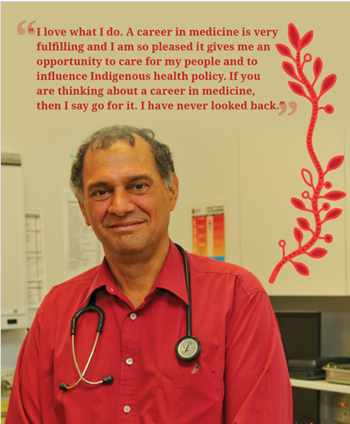
 In celebration of NAIDOC Week (5–12 July), we'd like to recognise RACP's first Aboriginal Fellow, Associate Professor Noel Hayman AM. Associate Professor Hayman has helped shape not only a profession, but a future where more Indigenous physicians can thrive.
Associate Professor Noel Hayman was working as a Quality Control Manager at Edgell's. He never imagined he would one day become one of Australia's most respected medical leaders. But after reading an article about studying medicine, he took a chance on a dream that would change not only his own life – but the lives of countless Aboriginal and Torres Strait Islander people.
A proud Wakka Wakka and Kalkadoon man, Associate Professor Hayman was driven by a deeply personal mission. Having witnessed the devastating impact of chronic disease within his own family, he was determined to help create a future where Aboriginal and Torres Strait Islander peoples could access the culturally safe, high-quality healthcare they deserved.
He became one of the first two Aboriginal doctors to graduate from the University of Queensland and went on to become the first Aboriginal Fellow of The RACP – breaking new ground and opening doors for those who would follow.
From establishing the pioneering Inala Indigenous Health Service to mentoring generations of Indigenous doctors, helping found the Australian Indigenous Doctors' Association, and shaping national health policy, Professor Hayman's impact reaches far beyond medicine.
His decades of leadership have transformed healthcare, inspired future generations, including his daughter, Dr Gemma Hayman, and strengthened The RACP's commitment to improving Aboriginal and Torres Strait Islander health.
Associate Professor Noel Hayman's story is one of courage, determination and unwavering purpose. His legacy lives on in every life improved, every doctor inspired, and every step taken towards a more equitable healthcare system. His career is proof of what's possible when one person dares to believe they can make a difference.

.png?sfvrsn=ce16b71a_1 "LIFT Melb and Bris combined eDM (1)")
Inform your practice at our next two Rapid-Fire Clinical Updates. Designed for physicians who want practical, evidence-based updates without spending days away from practice, these multidisciplinary events bring together leading experts to unpack the clinical developments shaping patient care right now.
Are you confident you have the latest knowledge to assess, diagnose and provide effective treatment for these patient presentations?
You're invited to our upcoming sessions:
Find out more about the RACP LIFT event series today.

 Safe prescribing for complex patients cannot be separated from careful diagnosis, ongoing clinical assessment and integrated physician led care. For this reason, and a wide range of regulatory, patient safety and quality concerns, our submission opposed the Pharmacy Board of Australia’s proposal to introduce national regulatory endorsement for pharmacist prescribing of Schedule 4 and Schedule 8 medicines.
Any potential pharmacist prescribing should be limited to clearly defined, low risk situations for minor conditions with a clear diagnosis, involving detailed care pathways, timely communication with usual treating doctors, use of real-time prescription monitoring and ongoing audit and evaluation mechanisms.
More than 320 members in Australia contributed expertise to this comprehensive submission. This is an incredible result and we greatly appreciate your time and expertise.
We are committed to ongoing constructive engagement and have called on the Pharmacy Board to work with us and other medical colleges to differentiate tightly defined, low-risk prescribing scenarios pharmacists might perform for patients without significant clinical complexity or undifferentiated conditions in settings with significant access barriers.
Find more consultations to share your expertise.
 Knowing about medicine shortages sooner can make a real difference to prescribing decisions and patient care.
New legislation introduced to Federal Parliament this month is a significant step towards giving physicians earlier, more reliable information about medicine availability.
The Therapeutic Goods Amendment (Medicines Shortages and Other Measures) Bill 2026 includes reforms that will:
- require medicine sponsors to provide at least 12 months' notice when they plan to permanently discontinue supply of a a reportable medicine in Australia (or notify the TGA as soon as practicable if earlier notice isn't possible), and update the TGA if those plans change
- enable the Therapeutic Goods Administration (TGA) to request more detailed information from sponsors about medicine availability.
These changes reflect advocacy for earlier and more transparent reporting of medicine shortages and discontinuations, helping physicians anticipate supply issues, consider treatment alternatives sooner and minimise disruption to patient care.
We are working closely with the TGA on implementing its Medicines Shortage Reform Program, with a focus on reducing the impact of shortages on clinical practice and ensuring you have the information you need to deliver safe, high quality care.
Find out more about the TGA's medicine shortage reforms and priorities.
Fee transparency and Informed Financial Consent (IFC) is about making sure people understand the likely costs of their healthcare before they agree to treatment. When it works well, it supports informed decision‑making, patient choice and trust in the health system. When it doesn’t, people can experience unexpected costs, confusion or 'bill shock'.
Please share your views and expertise on the Australian Government’s consultation on fee transparency in healthcare: IFC and split billing practices.
You can share your views to help inform our submission by emailing health.reform@racp.edu.au or directly contribute to the Australian Government’s survey. The consultation is open until Wednesday, 5 August 2026.
Find out more
 Our new Youth Appropriate Healthcare Position Statement (PDF) has been launched in both Australia and Aotearoa New Zealand, at the Australian Association for Adolescent Health's Youth Health Conference and the Moving Beyond Transition session at the Auckland RACP LIFT Rapid-Fire Clinical Update.
It highlights the need for more coordinated, developmentally appropriate healthcare that better meets the needs of adolescents and young adults as they move through different stages of care.
We thank the Youth Appropriate Health Care Working Group, whose expertise and leadership made this important work possible.
RACP members have been representing the physician voice in Parliament on two significant national inquiries affecting the health and wellbeing of children, young people and people with disability.
National Disability Insurance Scheme (NDIS)
Paediatrics and Child Health Division President, Dr Niroshini Kennedy, and Australasian Faculty of Rehabilitation Medicine President-elect, Dr Caitlin Anderson, gave evidence to the Australian Senate Inquiry into the National Disability Insurance Scheme Amendment (Securing the NDIS for Future Generations) Bill 2026.
Drawing on their clinical expertise, they called for clearer legislative definitions, clinically validated assessment tools, flexible reassessment pathways and a genuine commitment to co-designing future reforms with clinicians and people with disability. We also issued a media statement in response to the Inquiry's interim report.
Youth justice
The RACP also appeared before the Parliamentary Inquiry into Australia's youth justice and incarceration system. Dr Kennedy joined Aboriginal and Torres Strait Islander Health Committee member, Dr Jaqueline Fleetwood. Together, they advocated for a health-first approach that prioritises prevention, strengthens Aboriginal and Torres Strait Islander leadership and ensures children and young people are only detained in purpose-designed facilities with appropriate health and support services. They also called on the minimum age of criminal responsibility to be raised to 14 years. See our media statement for more information.
Together, these appearances demonstrate how members' clinical expertise is helping shape public policy and advocate for better health outcomes for some of Australia's most vulnerable communities.

We’re delighted to announce that our revised Recognition of Prior Learning Policy (RPL) is in effect from Friday, 1 May 2026. The Policy is an important part of how we recognise the breadth of experience our members bring to physician training and practice.
The review was informed by member feedback and used co-design process to prioritise and test improvements. It has been updated to address key points of confusion, align with our new curricula and streamline application and assessment processes. We’ve also extended application deadlines, helping to decrease pressure on trainees in the early stages of training.
After starting a new program, trainees now have:
- six months to apply for RPL for training requirements (up from three months)
- 12 months to apply for RPL for research project requirements (up from six months).
Importantly, these changes are intended to support members by making the RPL process easier to understand, while maintaining the integrity and standards of college training programs. We’re rolling out these changes as soon as possible so members can experience the benefits.
Find out more on our RPL webpage or get in touch with our team if you have any questions: EducationPolicy@racp.edu.au.
From 2027, the maximum number of Divisional Clinical Examination (DCE) attempts will increase from three to four, as approved by the College Education Committee.
This change applies to current Divisional Basic Trainees who have not yet exhausted their DCE attempts, including those who have undertaken, or will undertake, a third DCE attempt from the May/June 2026 examination onward. This change does not apply to individuals who have already exited the Basic Training program.
The standard required to pass the DCE remains unchanged. The maximum number of Divisional Written Examination (DWE) attempts remains at four. All examination attempts must continue being completed within the Basic Training time limit, in accordance with the Progression Through Training Policy.
What this means for trainees
Eligible trainees will have access to one additional DCE attempt if they are unsuccessful within the current limit. This change does not alter expectations about readiness. Trainees should continue planning their attempt based on their level of preparation and aim to sit when they are appropriately ready.
Trainees are encouraged to discuss their examination readiness with their Supervisor or Director of Physician/Paediatric Education (DPE), and to seek feedback early if they are unsuccessful to help guide next steps.
Visit the RACP website for more details. For further queries, contact RACP Member Support.

Funding opportunities now available
Planning a research project or looking to expand your skills through study or international collaboration? RACP Foundation has funding opportunities available to support the next step in your career.
- Research Development Grants (AUD $10,000 to $30,000) support smaller-scale research projects, including short-term or part-time studies. Applications close Friday, 24 July 2026
- Travel Grants (AUD $10,000 to $30,000) help RACP trainees and Fellows undertake short periods of research, further study or international collaboration. Applications close Friday, 31 July 2026.
College Meritorious Awards and Prizes
Know an RACP member who has made a significant contribution in their field or more broadly across the College?
Now is the time to nominate them for one of the following opportunities:

Your journey starts at the Symposium
If you're interested in applying for the 2026 RACP Trainee Research Awards, don't miss the RACP Trainee Research Awards Symposium. It will be held on Friday, 31 July from 2.30pm to 6pm AEST at 145 Macquarie Street, Sydney.
The Symposium is a valuable opportunity to see the standard of presentations, hear from recognised researchers, and gain insights that can help you prepare a competitive submission. We'll be joined by our guest speaker, renal and transplant physician, Associate Professor Melanie Wyld, alongside members of the College Research Grants Committee.
We encourage you to join us in-person at the RACP Sydney Office for valuable networking time while you support your peers. Can't make it in person? Join us virtually.
Register now

[Contagious Conversations] Approaching HIV elimination
 Listen now
This is the second episode of in the series, [Contagious Conversations], which is in collaboration with the Australasian Society for Infectious Diseases. We'll hear from expert guests in this series, from right across the interface of research, clinical care and public health.
In today’s episode, we look at the immense progress that has been made over three decades in the management of HIV. Once a fatal diagnosis, the disease can now be completely controlled by anti-retroviral therapy. Access to prophylactic treatment has also made a huge impact on rates of transmission in the community although barriers still remain to equitable access.
In this episode
- Professor Sharon Lewin OA FRACP PhD Director of the Peter Doherty Institute for Infection and Immunity, Director of the University of Melbourne, Director of the Cumming Global Centre for Pandemic Therapeutics
- Professor Dato’ Dr Adeeba Kamarulzaman FRACP FASc President and Pro Vice-Chancellor of Monash University Malaysia and Founding Director of the Centre of Excellence for Research in AIDS
- Richard Keane CEO of Living Positive Victoria
- Host: Associate Professor Sanjaya Senanayake FRACP infectious diseases physician and Director of the Department of Infectious Diseases at Canberra Hospital
Subscribe, claim CPD and get the transcript
To be among the first to find out about our latest podcasts, subscribe to new episode email alerts. All our podcasts are now available on YouTube. You can also search for them in Apple Podcasts, Spotify, Castbox, or any podcasting app. Did you know you can record listening and reading as a prefilled learning activity by logging on to MyCPD? For a transcript and supporting references of our podcast, please visit our podcast webpage.
